
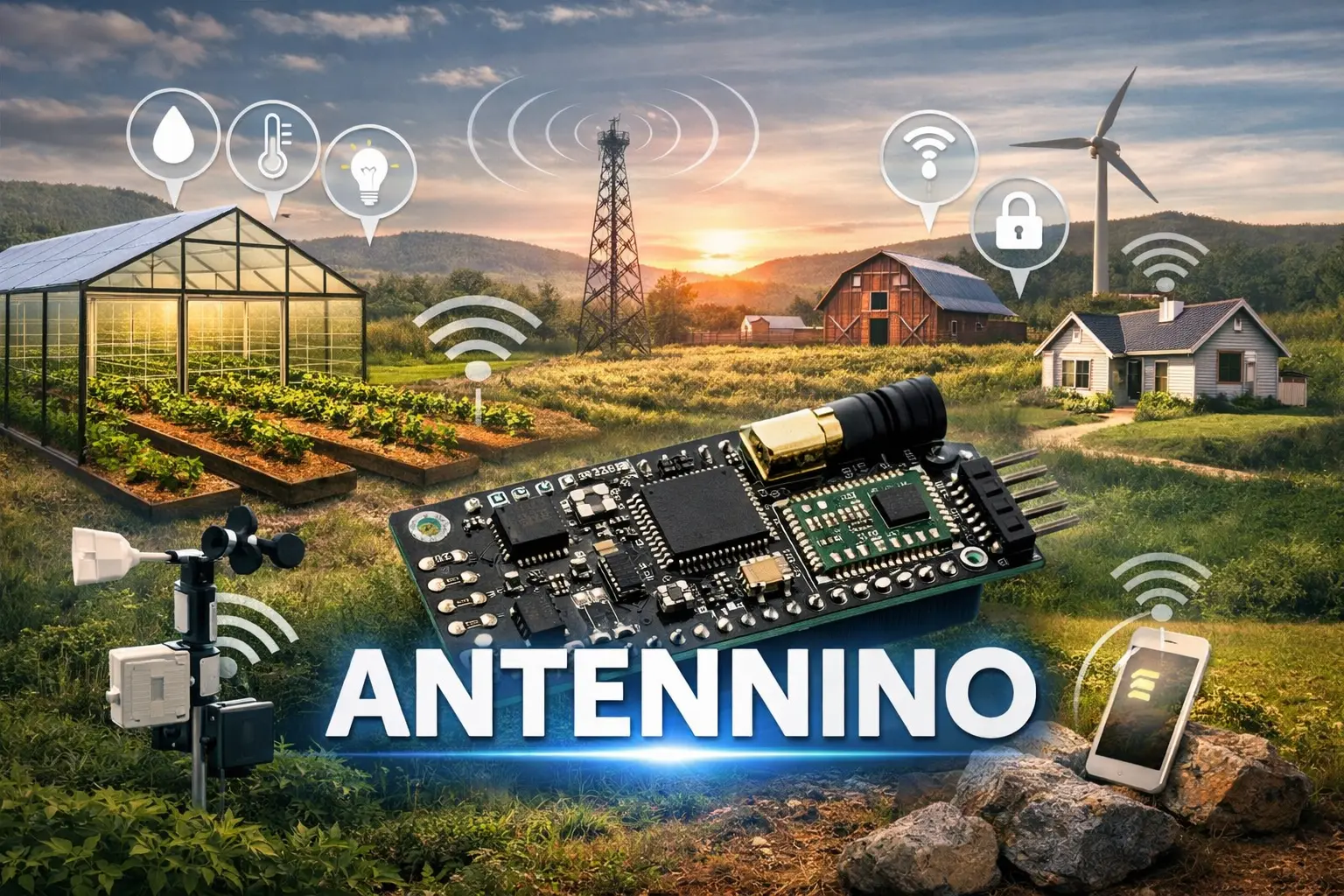
In the age of connected devices and smart technology, efficient communication between systems is essential. As the Internet of Things continues to expand, the demand for energy-efficient and versatile microcontrollers grows. Among the new generation of boards designed for wireless communication, the antennino stands out as an impressive and innovative choice. It combines the simplicity of Arduino with the capability of integrated radio transmission, providing a complete solution for low-power, long-range projects.
The antennino is more than just another development board; it represents a thoughtful approach to solving real-world IoT challenges. Its ability to operate for months on minimal power, communicate effectively across distances, and support a range of sensors makes it valuable for engineers, hobbyists, and educators alike. In this article, we will explore antennino in depth, covering how it works, what makes it unique, and how it contributes to the growing field of connected technology.
Understanding What Antennino Is
Antennino is a compact microcontroller board inspired by the popular Arduino ecosystem but equipped with built-in wireless communication features. The name itself reflects its identity: a combination of “antenna” and “Arduino.” The board allows developers to create wireless sensor networks without needing separate radio modules or external antennas. It’s particularly suitable for Internet of Things applications where data must travel between remote sensors and a central hub efficiently and reliably.
The antennino board typically features an ATmega-based processor, a sub-GHz radio transceiver, and energy-saving circuits. It is designed to consume minimal power, enabling long-term operation in battery-powered setups. Whether used in smart agriculture, environmental monitoring, or home automation, antennino provides an ideal platform for projects requiring simple, dependable, and low-power communication.
Technical Overview of Antennino
The technical structure of antennino is one of its greatest strengths. It provides all the essential hardware for wireless communication within a small and power-efficient package. Here are some of the main specifications that define its performance:
- Microcontroller: ATmega328P or similar, compatible with Arduino IDE
- Radio Transceiver: Sub-GHz (often 433 MHz) module for long-range connectivity
- Power Supply: Operates on 3.3V with options for battery or external power
- Communication: SPI and I2C interfaces for sensors and peripheral modules
- Security: Built-in AES encryption for safe data transmission
- Energy Efficiency: Optimized for deep-sleep modes and intermittent operation
These features make antennino suitable for both beginners and professionals. It eliminates the need for separate radio shields and simplifies the development of energy-conscious IoT networks. Its compatibility with existing Arduino libraries also shortens the learning curve, allowing quick adaptation for experienced developers.
How Antennino Works in IoT Systems
In a typical Internet of Things environment, antennino acts as either a node or a gateway. A node collects data from attached sensors—such as temperature, humidity, or motion detectors—and sends this information wirelessly to a central gateway. The gateway, in turn, collects the data from multiple nodes and may upload it to a server or cloud platform for further processing.
Antennino’s radio module operates on a frequency band that supports long-distance communication with minimal interference. Because it uses sub-GHz frequencies, the signal travels farther and penetrates obstacles better than higher-frequency networks. This makes antennino perfect for rural installations, outdoor projects, or setups that require consistent communication despite challenging terrain or building layouts.
The workflow of antennino is straightforward:
- The microcontroller wakes from a low-power state.
- It reads data from the connected sensor.
- It transmits that data via the built-in radio module.
- It returns to sleep mode to conserve battery life.
This simple cycle allows the board to function for extended periods—sometimes months—on a single set of batteries.
Applications and Use Cases of Antennino
Antennino has found applications in numerous industries and educational settings because of its flexibility and low energy demands. Below are some of the most common uses:
Smart Agriculture
Farmers can deploy antennino-based sensor nodes across their fields to measure soil moisture, temperature, and humidity. The data helps automate irrigation and monitor environmental conditions, improving productivity and conserving water.
Home and Building Automation
In homes and offices, antennino serves as the brain for wireless temperature sensors, light controllers, and motion detectors. It allows users to create intelligent control systems that respond automatically to changes in the environment.
Environmental Monitoring
From weather stations to pollution detection systems, antennino offers a practical platform for continuous environmental observation. Its low power requirements mean it can operate remotely for long periods with little maintenance.
Educational Projects
For schools and universities, antennino is an excellent tool for teaching electronics and programming. Students can learn about wireless communication, embedded systems, and energy efficiency through hands-on experiments.
Industrial and Research Data Collection
In laboratories or factories, antennino networks can gather precise data from distributed sensors, helping researchers and engineers monitor machinery, test conditions, or experimental results in real time.
Benefits of Using Antennino
The reasons why antennino is gaining popularity among developers are clear. It combines the best attributes of simplicity, flexibility, and performance in one package. Some key benefits include:
- Energy Efficiency – Its ability to run for months on small batteries makes antennino perfect for remote locations and unattended systems.
- Ease of Use – Fully compatible with the Arduino ecosystem, antennino can be programmed using familiar tools and code libraries.
- Long Range – Its sub-GHz communication provides better coverage than Wi-Fi or Bluetooth, making it suitable for rural and industrial environments.
- Compact Design – The small form factor allows easy integration into compact sensor systems and enclosures.
- Secure Data Transmission – Encryption support ensures that transmitted data remains safe and protected from interference or interception.
By combining these advantages, antennino fills a gap between simple hobbyist boards and complex industrial modules.
Getting Started with Antennino
Working with antennino is as straightforward as using an Arduino. The setup process involves connecting it to a computer, installing the Arduino IDE, and loading example sketches. Once configured, developers can attach sensors to the available pins and customize the code to fit specific applications.
A typical antennino project might include:
- Connecting a soil moisture sensor to monitor water levels.
- Programming the board to send readings every 10 minutes.
- Setting up another antennino or a gateway to receive and log the data.
- Running the system on AA batteries for long-term deployment.
Because the platform is open and flexible, users can easily experiment with power-saving techniques, signal range adjustments, and encryption settings to optimize performance.
Optimizing Antennino for Long-Term Operation
For projects that need to run continuously, optimizing antennino for endurance is crucial. Here are some practices that ensure reliable long-term performance:
- Use high-quality batteries or rechargeable power sources suited to the environmental conditions.
- Activate deep-sleep modes whenever possible to minimize power consumption.
- Choose appropriate transmission intervals; frequent data sending drains power faster.
- Keep the antenna clear of metallic obstructions and properly oriented for maximum signal strength.
- Regularly test communication stability and update firmware to maintain compatibility and reliability.
By following these principles, developers can ensure that antennino-powered systems remain efficient and sustainable over time.
Antennino in Comparison with Other Boards
When compared to traditional Arduino boards or Wi-Fi-based modules like the ESP8266, antennino stands out due to its focus on energy efficiency and distance. While Wi-Fi offers higher data throughput, it consumes more power and requires stronger infrastructure. Antennino, on the other hand, prioritizes range and low consumption, making it ideal for periodic data transfers and monitoring tasks. For projects where constant connectivity is unnecessary, antennino delivers superior performance and reliability.
Future of Antennino and Low-Power Communication
The growing demand for smart, sustainable devices ensures that solutions like antennino will play an increasingly important role. As cities and industries move toward automation, low-power communication platforms are becoming essential. The flexibility of antennino allows it to adapt to new protocols, sensors, and emerging technologies, ensuring it remains relevant as IoT standards evolve.
Developers appreciate antennino not only for its practicality but also for its role in promoting open-source innovation. It encourages learning, experimentation, and problem-solving, all while supporting environmentally responsible design through energy-efficient technology.
Conclusion
Antennino represents the next step in low-power, reliable wireless communication. Its thoughtful combination of efficiency, range, and simplicity makes it a standout tool for both professional and hobbyist developers. Whether used in smart agriculture, environmental monitoring, or classroom learning, antennino delivers consistent results with minimal energy use. As the world continues to connect more devices in smarter ways, antennino will remain a dependable and adaptable foundation for sustainable innovation.
FAQs About Antennino
1. What is antennino used for?
Antennino is used for wireless communication in IoT projects, acting as a low-power node or gateway that transmits data between sensors and a central system.
2. How does antennino save power?
It enters deep-sleep modes between data transmissions, reducing energy use and extending battery life.
3. Can antennino work outdoors?
Yes, antennino can operate outdoors when properly enclosed and powered, making it ideal for agriculture and environmental monitoring.
4. Is antennino beginner-friendly?
Absolutely. It uses the Arduino environment, so even those new to programming can start developing simple wireless projects quickly.
5. How far can antennino transmit data?
Depending on the antenna and environment, antennino can transmit several hundred meters, providing strong performance for remote sensing applications.
You May Like: How Digital Infusing Aggr8tech is Shaping Modern Business Transformation