
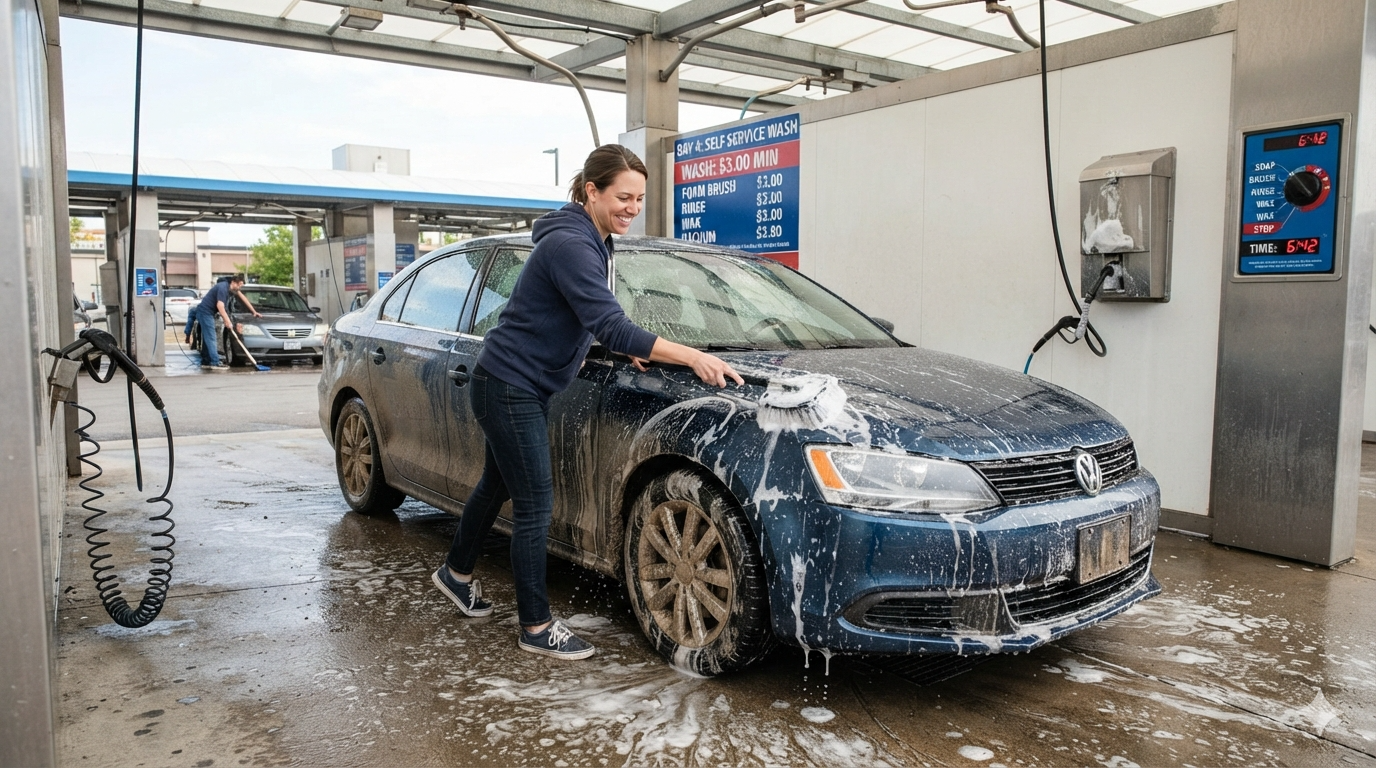
A self wash car wash gives you control over how your vehicle gets cleaned. Instead of leaving your car with workers, you wash it yourself. Most self-service car washes provide a wash bay, pressure washer, foam brush, rinse system, and vacuum. You usually pay for the time you use. This makes the process simple and affordable for many drivers. It can also be useful when your car needs quick cleaning after rain, dust, mud, or road trips. You can focus on the areas that need extra attention. You also choose how much water and soap you use. For many car owners, this creates a better cleaning experience. However, using the equipment correctly is important. A careless wash can create scratches or damage delicate surfaces. This guide explains everything you need to know before visiting a self-service wash bay.
What Is a Self Wash Car Wash?
A self wash car wash is a cleaning facility where customers wash their own vehicles. You normally drive into a marked washing bay. The bay has special equipment designed for vehicle cleaning. Common tools include a high-pressure spray gun, foam brush, soap setting, rinse setting, and wax option. Some locations also provide an air dryer or vacuum station. Payment may work through coins, cards, tokens, or digital systems. You select a cleaning option and use the equipment during your paid time. The biggest difference from an automatic car wash is control. You decide where to spray and how long to clean each area. This can help when your vehicle has stubborn dirt in certain places. It can also be a useful choice for people who enjoy caring for their cars personally.
How Does a Self Wash Car Wash Work?
Using a self wash car wash is usually easy, even for first-time users. First, park your vehicle inside the wash bay. Make sure your windows and doors are fully closed. Remove large pieces of dirt before using strong water pressure. Next, select the pre-wash or soap option. Spray the vehicle from top to bottom. Give extra attention to dirty areas without holding the nozzle too close. After applying soap, use the foam brush carefully. Rinse the brush first if it looks dirty. Then rinse your vehicle with clean water. Start from the roof and move toward the lower panels. Some facilities offer spot-free rinse water. This can reduce water spots after drying. Finally, use a microfiber towel if allowed. You can then move your vehicle to the vacuum or drying area. Always follow the facility’s posted instructions.
Self Wash Car Wash Equipment You Will Find
A typical self wash car wash offers several tools for basic vehicle cleaning. The pressure washer is usually the main piece of equipment. It removes loose dirt and road grime quickly. The foam brush spreads cleaning solution across the vehicle. However, you should inspect it before use. Small dirt particles trapped in the brush may scratch paint. Many wash bays also offer different spray settings. These may include pre-soak, soap, rinse, wax, and spot-free rinse. A vacuum station is another common feature. It helps clean carpets, seats, and floor mats. Some modern facilities provide fragrance machines or mat cleaners. Equipment can vary from one location to another. Always check the instructions before selecting a setting. Using the correct setting helps protect your paint and saves cleaning time. Good equipment also makes the washing process faster and easier.
Complete Self Wash Car Wash Detailing Table
| Cleaning Stage | Equipment | Main Purpose | Helpful Tip |
|---|---|---|---|
| Pre-rinse | Pressure washer | Remove loose dirt | Start from the roof |
| Pre-soak | Soap spray | Break down grime | Cover the whole vehicle |
| Main wash | Foam brush | Clean surfaces | Rinse brush first |
| Wheel cleaning | Pressure spray | Remove brake dust | Avoid very close spraying |
| Rinse | Clean water | Remove soap | Work from top to bottom |
| Spot-free rinse | Filtered water | Reduce water spots | Use before drying |
| Wax | Wax spray | Add protection | Apply evenly |
| Drying | Air dryer or towel | Remove water | Use clean microfiber |
| Interior cleaning | Vacuum | Remove dust and debris | Reach under seats |
| Final check | Visual inspection | Find missed areas | Check glass and wheels |
This simple table can help you follow a complete cleaning routine without missing important steps.
Benefits of Using a Self Wash Car Wash
There are several reasons drivers choose a self wash car wash instead of other options. The first benefit is control. You decide which parts receive the most attention. This is useful when your vehicle has mud around the wheels or lower panels. Another benefit is flexibility. You can spend more time on areas that need deeper cleaning. Self-service washing can also be cheaper than professional detailing. You pay for the equipment and time rather than a full labor package. Many drivers also enjoy the hands-on experience. Washing your own vehicle helps you notice small problems. You might spot paint damage, tire issues, or rust early. It can also be satisfying to see the final result. However, the total cost depends on the facility and how long you use its equipment.
Is a Self Wash Car Wash Safe for Your Paint?
A self wash car wash can be safe for your paint when used properly. The pressure washer should not be held extremely close to the paint. Strong pressure from a short distance may damage weak paint or loose trim. You should also avoid dirty brushes. A foam brush can collect sand and grit from previous customers. Those particles can leave fine scratches on a vehicle’s finish. Pre-rinsing the car is important because it removes loose dirt. Use soap before gently touching painted surfaces. Keep the nozzle moving instead of focusing on one small area. Avoid spraying directly into damaged seals or sensitive electrical areas. If your vehicle has ceramic coating or special paint protection, check the product instructions. Careful technique matters more than simply choosing a particular wash type.
How to Wash Your Car Step by Step
The best way to use a self wash car wash is to follow a clear process. Begin by removing personal items from the vehicle. Close all windows and doors tightly. Inspect the wash equipment before starting. Select the pre-rinse setting and spray loose dirt from the vehicle. Work from the roof downward. Next, apply the recommended soap or pre-soak solution. Let it loosen heavy grime for a short period. Do not allow soap to dry on the paint. If using a brush, rinse it thoroughly first. Clean gently without applying excessive pressure. Rinse the vehicle completely afterward. Use spot-free water if the facility offers it. Check the mirrors, glass, wheels, and lower panels. Move to the vacuum area if interior cleaning is needed. Finally, dry the vehicle using a clean microfiber towel when permitted. This method provides a more consistent result.
Common Mistakes to Avoid
New users can make several mistakes at a self wash car wash. One common mistake is spraying the pressure washer too close to the paint. Another is using a dirty foam brush without rinsing it. Some drivers also start scrubbing before removing loose dirt. This can move sand across the paint and create scratches. Using too much soap is another unnecessary mistake. More soap does not always mean better cleaning. You should also avoid allowing cleaning products to dry on hot panels. Washing under direct, intense sunlight can make this problem worse. Never ignore the facility’s instructions. Different machines may have different pressure levels and settings. Avoid rushing the final rinse because leftover soap can leave marks. Finally, do not use an old towel filled with dirt. Clean microfiber towels are much safer for vehicle surfaces.
How Much Does a Self Wash Car Wash Cost?
The price of a self wash car wash varies by location and facility. Some places charge by the minute. Others use fixed packages or tokens. Your total cost depends on how efficiently you use the equipment. A quick exterior wash may require only a short session. A heavily dirty vehicle may need additional time. Interior vacuuming can also add to the total cost. Before starting, check the displayed rates and available payment methods. Some facilities offer cheaper off-peak prices or membership plans. If you visit regularly, a membership may provide better value. However, price should not be the only factor. Clean equipment and good water quality also matter. A slightly more expensive wash can provide a better experience. Compare nearby facilities based on equipment, cleanliness, convenience, and customer reviews.
Self Wash vs Automatic Car Wash
Choosing between self-service and automatic washing depends on your needs. An automatic car wash is usually faster. You simply drive into the system and select a package. This is convenient when you have limited time. A self wash car wash gives you more control over the cleaning process. You can spend extra time on wheels, mirrors, bumpers, and other dirty areas. Self-service washing may also feel more personal. Automatic systems can provide consistent results, but some systems use brushes or other methods that certain owners prefer to avoid. Touchless automatic systems use high-pressure water instead. Both options have advantages and limitations. Your choice should depend on your budget, available time, vehicle condition, and cleaning goals. For detailed cleaning, many owners prefer having direct control over each step.
Best Time to Use a Self Wash Car Wash
Timing can make your self wash car wash experience easier. Early morning or late afternoon may be more comfortable in hot weather. Strong sunlight can make water and soap dry quickly. This can leave spots or streaks on the paint. A cooler period gives you more time to rinse and dry the vehicle. You may also find fewer customers during quieter hours. Less traffic means you can work without feeling rushed. After rain, a vehicle may have fresh dirt and water marks. However, check the weather before washing. Cleaning immediately before another heavy rain may not provide much value. If the car has heavy mud, wash it as soon as practical. Removing mud prevents it from staying on the paint for long periods. Always consider temperature, sunlight, traffic, and weather conditions.
Tips for a Better Self-Service Car Wash
A few simple habits can improve your results. Bring a clean microfiber towel if the facility allows outside towels. Keep your belongings organized before entering the wash bay. Read the instructions on the machine before paying. Start with a pre-rinse instead of immediately scrubbing. Always clean from the cleaner upper sections toward the dirtier lower areas. Rinse the foam brush before touching your vehicle. Keep the spray nozzle at a safe distance. Use short, controlled movements instead of holding pressure on one spot. Pay attention to wheels and lower panels because they often collect heavy grime. Use a spot-free rinse when available. After washing, inspect the vehicle from different angles. Look for missed dirt around badges, mirrors, door handles, and wheel arches. These small steps can make a basic wash look much better.
Can You Clean the Interior at a Self-Service Wash?
Many self-service facilities provide separate vacuum stations for interior cleaning. These stations can remove dust, crumbs, hair, and loose debris. Start by removing floor mats and larger items. Shake mats outside the vehicle if the facility permits it. Vacuum the seats, carpets, floor areas, and spaces under the seats. Use smaller attachments around tight areas when available. Avoid forcing the vacuum into delicate electronic components. You can also wipe hard interior surfaces with a suitable microfiber cloth. Do not spray large amounts of liquid directly onto dashboards or screens. Instead, apply an appropriate cleaner to a cloth when recommended. Some facilities offer special mat-cleaning machines. These can be useful for heavily soiled floor mats. Always follow local facility rules. A basic interior cleaning can make the whole vehicle feel fresher without requiring professional detailing.
How Often Should You Wash Your Car?
Your ideal washing schedule depends on driving conditions. Vehicles driven on dusty roads may need frequent cleaning. Rain, mud, road salt, and construction dust can also increase cleaning needs. A vehicle used mostly in clean city conditions may need less frequent washing. Regular cleaning helps prevent dirt from building up. It also makes future washes easier. If bird droppings or tree sap land on the paint, clean them sooner. These substances can become harder to remove when they dry. During long road trips, inspect the front bumper and windshield regularly. A self wash car wash can be useful for quick maintenance between deeper detailing sessions. However, washing frequency should not become excessive. Good technique matters more than washing every day. The goal is to keep the vehicle clean while avoiding unnecessary contact with the paint.
When Should You Choose Professional Car Detailing?
A self wash car wash is excellent for regular maintenance, but it cannot replace every professional service. Professional detailers have specialized tools and products. They can perform deeper interior cleaning and paint correction. They may also offer polishing, ceramic coating, leather treatment, and stain removal. Consider professional detailing when your vehicle has serious stains or neglected paint. It can also be useful before selling a car. A detailed vehicle may look more attractive to potential buyers. However, you do not need professional detailing for every basic wash. Regular self-service cleaning can keep your car looking fresh between professional appointments. The best approach is often a combination of both methods. Use self-service washing for routine cleaning. Save professional detailing for deeper maintenance and paint-care needs.
Frequently Asked Questions
1. Is a self wash car wash cheaper than an automatic wash?
It can be cheaper, especially when you clean your vehicle quickly. The final price depends on local rates and your cleaning time. Efficient use of the equipment can help control costs.
2. Can I use a self-service wash on a new car?
Yes, but use gentle techniques. Avoid dirty brushes and excessive pressure. Follow the vehicle manufacturer’s recommendations for paint and coating care.
3. Should I use the foam brush?
You can, but inspect and rinse it first. Dirt trapped inside the brush may scratch the paint. A clean microfiber wash mitt is often safer when outside tools are permitted.
4. How long does a self-service car wash take?
A basic wash can be completed quickly. The exact time depends on the vehicle’s condition and the facility’s equipment. Heavily dirty cars usually need more time.
5. Can I wash my wheels at a self-service car wash?
Yes. Wheels can usually be cleaned with the available pressure washer and approved cleaning settings. Avoid spraying too closely around sensitive components.
6. Does self-service washing damage car paint?
It does not have to. Correct pressure, proper distance, clean equipment, and good washing technique reduce the risk. Avoid scrubbing heavy dirt directly against the paint.
Conclusion
A self wash car wash is a practical way to keep your vehicle clean without paying for full-service detailing every time. It gives you control over the washing process and lets you focus on areas that need attention. The key is using the equipment carefully. Always remove loose dirt before touching the paint. Rinse brushes before use and avoid excessive pressure. Work from top to bottom and finish with a thorough rinse. If possible, use spot-free water and clean microfiber towels. Regular washing can help your vehicle maintain a cleaner appearance throughout the year. For deeper problems, professional detailing may still be worthwhile. With the right technique, self-service washing can be simple, affordable, and satisfying. The next time your vehicle needs attention, follow these steps and give your car a careful clean.