
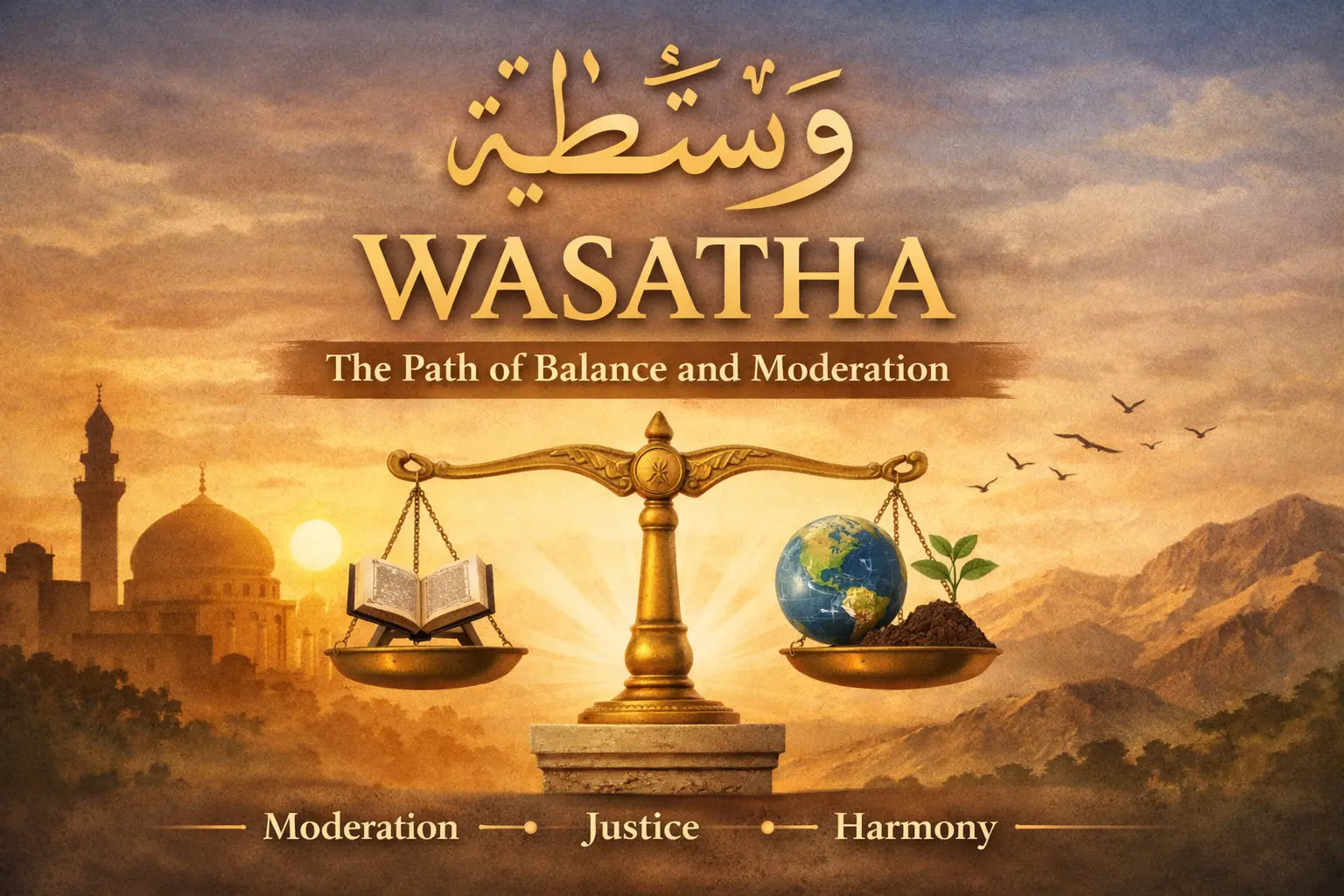
In today’s fast-paced world, where extremes dominate every aspect of life, the concept of balance has become more important than ever. The term “wasatha” originates from Arabic, meaning moderation, balance, and the middle path. Unlike ordinary neutrality, wasatha carries a deeper implication of justice, ethical responsibility, and thoughtful decision-making. It is a principle that applies not only to individual conduct but also to societies, communities, and governance.
The Meaning and Origin of Wasatha
The word wasatha comes from the Arabic root w‑s‑ṭ, which literally translates to “middle” or “center.” It reflects the idea of avoiding extremes and maintaining equilibrium in thoughts, actions, and choices. Wasatha does not imply weakness or indecision; instead, it represents a deliberate and ethical positioning that ensures fairness and balance. Historically, the term has been used to guide moral behavior and social conduct, emphasizing moderation in all aspects of life, whether personal, professional, or spiritual.
Wasatha in Religious Context
In Islamic tradition, wasatha holds significant importance. The Quran describes Muslims as an “Ummatan Wasatan,” meaning a community that is balanced, moderate, and just. This phrase reflects a society that avoids excesses and embraces fairness, ethical conduct, and responsible behavior. Scholars interpret wasatha as a guiding principle for individuals to act with justice, maintain social harmony, and uphold moral values.
The principle encourages Muslims to maintain a balance between spiritual and worldly life. It rejects extreme asceticism on one hand and indulgence on the other, promoting a practical approach to life that aligns moral integrity with societal responsibilities. This religious foundation of wasatha has influenced broader discussions on justice, leadership, and social ethics in many communities.
Practical Applications of Wasatha in Daily Life
Understanding wasatha is not limited to religious or theoretical contexts. It offers practical guidance for modern living. Applying the principle of wasatha in daily life involves balancing work and personal time, managing emotional responses, and making ethical decisions in challenging situations. It encourages individuals to avoid extremes such as overworking, neglecting personal well-being, or pursuing unhealthy behaviors.
For example, in decision-making, wasatha promotes considering multiple perspectives before acting. It fosters patience, fairness, and mindfulness. In relationships, it encourages moderation in expectations and responses, allowing for understanding and cooperation. By embracing wasatha, individuals can cultivate a sense of inner peace and harmonious interactions with others.
Wasatha and Social Responsibility
Beyond personal life, wasatha is crucial for building just and balanced societies. Communities that embody wasatha prioritize equity, fairness, and responsible governance. Leaders guided by this principle ensure that policies are inclusive, resources are distributed justly, and social harmony is maintained. Wasatha in social contexts discourages extremism, bias, and unjust practices, emphasizing moderation in both judgment and action.
Educational institutions, workplaces, and governments can benefit from adopting the principles of wasatha. By promoting balance in learning, work culture, and social policies, societies can foster ethical decision-making, reduce conflicts, and support sustainable development. Wasatha thus becomes a guiding principle for collective well-being.
Wasatha in Ethics and Philosophy
Philosophically, wasatha aligns with concepts such as the “Golden Mean” in Western thought and the “Middle Way” in Eastern traditions. However, its unique emphasis on justice and ethical responsibility distinguishes it from other approaches to moderation. Wasatha is not merely about finding a midpoint; it is about actively choosing a path that reflects fairness, wisdom, and ethical considerations.
This approach encourages critical thinking and self-awareness. It asks individuals to reflect on their actions, assess consequences, and act in ways that promote balance and justice. In leadership, ethical decision-making inspired by wasatha ensures that policies and strategies are effective, equitable, and sustainable.
Modern Relevance of Wasatha
In contemporary society, the concept of wasatha remains highly relevant. From mental health and work-life balance to social justice and governance, the principle of moderation provides practical solutions to modern challenges. For instance, wasatha encourages moderation in technology use, helping individuals avoid digital addiction while benefiting from connectivity. In environmental conservation, it promotes sustainable practices that balance human needs with ecological preservation.
By adopting wasatha, people can cultivate resilience, reduce stress, and foster ethical communities. The principle serves as a timeless guide for navigating the complexities of modern life while maintaining moral and social integrity.
Conclusion
Wasatha is more than a concept; it is a guiding principle for living a balanced, ethical, and responsible life. Rooted in the idea of moderation, it extends from personal behavior to social responsibility, religious ethics, and philosophical reasoning. Embracing wasatha helps individuals and societies avoid extremes, make fair decisions, and cultivate harmony. In a world often dominated by excess and imbalance, wasatha provides a path toward justice, balance, and sustainable well-being.
Frequently Asked Questions (FAQs)
1. What does wasatha mean?
Wasatha means moderation, balance, and a middle path in thoughts, actions, and decisions.
2. Where is wasatha mentioned in religious texts?
Wasatha is mentioned in the Quran, describing Muslims as an “Ummatan Wasatan,” a balanced and just community.
3. How can wasatha be applied in daily life?
It can be applied by balancing work and personal time, making ethical decisions, and avoiding extreme behaviors.
4. Why is wasatha important in society?
Wasatha ensures fairness, equity, and ethical governance, helping communities avoid conflicts and injustice.
5. How does wasatha relate to philosophy?
It aligns with ethical moderation like the Golden Mean, emphasizing justice, wisdom, and responsible decision-making.
You May Like: Ntdtvjp: A Complete Guide to Its Mission, Content, and Influence